A Comprehensive Overview of Popular Residence and Citizenship Programmes: Grenada, St Kitts and Nevis, Dominica, Vanuatu, Turkey and Hong Kong’s New CIES — thresholds, travel access and what each programme is designed to do
How to use this comparison
A few distinctions help keep the programmes clear.
– Contribution routes and real-estate routes are structured differently; hold periods and exit terms follow each government’s rules.
– Visa-free lists, processing times and treaty routes are set by other governments and can change.
– A second nationality is a separate legal status. China does not recognise dual nationality. What that means for Chinese nationality, household registration, domestic property or the document used to enter the mainland should be reviewed with qualified counsel. A short visa-free stay — such as Grenada’s widely cited arrangement with mainland China — is a travel fact, not proof that two nationalities are held at once.

Grenada
Often considered when the applicant needs European short stays, Asia access and, for some households, a later conversation about the United States.
– Contribution to the National Transformation Fund: commonly from about US$235,000 for the principal applicant, plus family and government fees
– Approved real estate: commonly from about US$270,000, with a published hold of about five years
– If approved, citizenship often takes several months; relocation is not required
– Typical travel use: Schengen short stays, the United Kingdom subject to current ETA rules, Singapore and Hong Kong
– Only Caribbean citizenship-by-investment nationality with a US E-2 treaty
– Grenadian passports are widely cited for short visa-free visits to mainland China, where that waiver remains in force

St Kitts and Nevis
The world’s oldest citizenship-by-investment programme (1984). Usually chosen for passport standing.
– Contribution: commonly about US$250,000; approved real estate is higher
– Often four to six months; relocation is not required
– Among the stronger passports in this group: visa-free or visa-on-arrival access widely quoted in the high 140s to around 150 destinations as at 2026, including Schengen, the United Kingdom subject to ETA, Singapore and Hong Kong

Dominica
The lowest official contribution among the Eastern Caribbean five, while still covering European short stays.
– Economic Diversification Fund: commonly US$200,000 for a single applicant; approved real estate is an alternative
– Often three to six months; relocation is not required
– Usual reasons to look here: Schengen, Singapore and Hong Kong
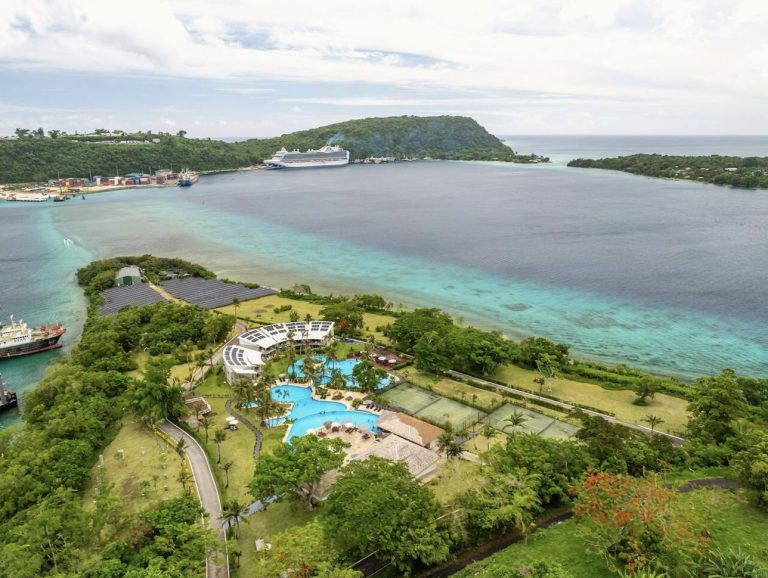
Vanuatu
The faster Pacific option, often considered when timing is the priority.
– Development Support Programme: commonly from about US$130,000 as a government contribution, plus due diligence
– Often described as one to three months
– Biometrics can be given in Hong Kong, Dubai or Port Vila; no language test and no requirement to live in Vanuatu
– Current reach is in the region of 90 to about 100 destinations, typically including Singapore and Hong Kong

Turkey
The route for applicants who prefer to place capital in real estate or another qualifying asset, and who want the nationality of a large state.
– Qualifying real estate: at least US$400,000, with a three-year annotation on the title
– Deposit or fund routes: generally about US$500,000
– Spouse and children under 18 are typically included on the same citizenship application
– Several months after title, valuation and security checks
– G20 and NATO passport
– US E-2 treaty exists
– Property selection still turns on licensed valuation, clean title and the statutory annotation
Hong Kong — New Capital Investment Entrant Scheme
A residence scheme, not a passport issued after a contribution. Relevant when the aim is to live, study or hold assets in Hong Kong — and only if the applicant is eligible.
– Investment standard: HK$30 million, including a mandatory HK$3 million in the designated CIES portfolio
– Remainder in permissible assets: Hong Kong-listed securities, bonds, deposits, funds and, within the rules, non-residential property
– First permission can be renewed while the investment is maintained
– Right of abode is separate: generally seven years of ordinary residence
– An HKSAR passport, if it arises at all, follows later nationality rules

Eligibility is limited to foreign nationals; Chinese nationals who already hold permanent residence in a foreign country; Macao SAR residents; and Chinese residents of Taiwan. Mainland-resident PRC nationals are not eligible under the published rules. CIES is a Hong Kong residence route, not a substitute for a Caribbean or Turkish passport.
What is the Schengen Area?
The Schengen Area is a group of European countries that have removed passport checks at their shared land borders. As at 2026 it covers 29 states — most of the European Union, plus Iceland, Norway, Switzerland and Liechtenstein. For a visitor, the practical effect is simple: one short-stay permission is used across the whole zone, rather than a separate visa for France, then Germany, then Italy.
A visa-free or visa-on-arrival passport that is accepted for Schengen typically allows short visits of up to 90 days in any 180-day period. That is enough for holidays, school visits and business meetings. It is not the right to live, work or settle in Europe, and it is not an EU passport.
On this page, Grenada, St Kitts and Nevis and Dominica are the citizenships generally used for Schengen short stays. Vanuatu and Turkey should be checked against the current list at the time of travel. Hong Kong CIES is a residence permission in Hong Kong; it is not a Schengen visa. The European Union can add or remove visa-free nationalities. The comparison table is dated August 2026 for that reason.
What is a US E-2 visa?
E-2 is a United States treaty-investor visa. It is not citizenship, and it is not a green card. It allows a national of a country that has an E-2 treaty with the United States to live in the US in order to develop and direct a real business they have invested in. The spouse can usually apply to work; school-age children can typically attend school while the visa is valid. The visa is temporary and can be renewed if the business and the treaty relationship continue to meet US rules.
Two points matter for the programmes on this page.
– Among the five citizenship routes above, Grenada and Turkey are the nationalities with an E-2 treaty. St Kitts and Nevis, Dominica and Vanuatu do not have one. Hong Kong CIES is a residence permission in Hong Kong; it does not create E-2 nationality.
– Citizenship from Grenada or Turkey does not by itself produce an E-2 visa. The US application is separate. It is assessed by US authorities, requires a genuine qualifying investment in a US enterprise, and — as a working expectation in 2026 — is often discussed only after a period of domicile in the treaty country, commonly described as about three years in the Grenada context. Approval is discretionary. Treaty lists and US practice can change.
E-2 is therefore a possible next conversation for some Grenada or Turkey citizens, not a feature bundled into the citizenship application.
Comparison — August 2026. Verify before applying.
| Grenada | St Kitts & Nevis | Dominica | Vanuatu | Turkey | Hong Kong New CIES | |
|---|---|---|---|---|---|---|
| If approved | Citizenship | Citizenship | Citizenship | Citizenship | Citizenship | Hong Kong residence |
| Typical published entry | ~US$235,000 contribution or ~US$270,000 approved property | ~US$250,000 contribution or higher approved property | ~US$200,000 contribution or approved property | ~US$130,000 contribution | US$400,000 property (or ~US$500,000 deposit/fund) | HK$30 million, including HK$3 million mandated portfolio |
| Indicative time to first status | Several months | About 4–6 months | About 3–6 months | Often 1–3 months | Several months after title and checks | Often weeks to a few months |
| Relocation required for first status? | No | No | No | No; biometrics possible in Hong Kong | No | Not to hold a renewable visa; ordinary residence required for right of abode |
| Schengen short stays | Generally yes, subject to EU policy | Generally yes, subject to EU policy | Generally yes, subject to EU policy | Check current list | Check current list | CIES is not a Schengen visa |
| United Kingdom | Generally yes, subject to ETA | Generally yes, subject to ETA | Confirm at filing | Check current list | Visa required | Not conferred by CIES |
| Singapore / Hong Kong | Generally yes | Generally yes | Generally yes | Generally yes | Check the current list | Holder lives in Hong Kong as a resident |
| Mainland China on the new document | Short visa-free stays widely cited | Verify current list | Verify current list | Verify current list | Verify current list | CIES is not a second passport |
| US E-2 | Treaty exists; separate US application | No treaty | No treaty | No treaty | Treaty exists; separate US application | No |
| Who may apply | Subject to that government’s review | Same | Same | Same | Same | See published CIES eligibility |
Government fees, due-diligence fees, professional fees and extra dependants sit outside the headline figures.
How Jade Land Properties can assist
Our team has coordinated residence and citizenship applications of the kind described above — typical document lists, how approved real estate fits the application, and how property and application timetables need to align.
Looking to buy, sell or lease in Hong Kong’s prime neighbourhoods, to review a property overseas on its own merits, or to speak in confidence with our team about programmes of this kind?
Trust Jade Land Properties, your dedicated boutique real estate agency with over 32 years of expertise. Our experienced team offers personalised guidance, in-depth market insights, and full support throughout your property journey.
Contact us at [email protected] or via WhatsApp: 6172 1118 for a confidential discussion.
Disclaimer
Due diligence and source-of-funds review can result in refusal. Prior case experience is not a promise of the same outcome. This page is general information, not legal, tax or immigration advice.
This article is dated August 2026 and is not an offer of any citizenship, visa or investment product. Grants are made only by the relevant government. Processing times, fees and visa-waiver lists change. The People’s Republic of China does not recognise dual nationality. Jade Land Properties (HK) Limited is a Hong Kong estate agency. Enquiries through this site are received in Hong Kong.